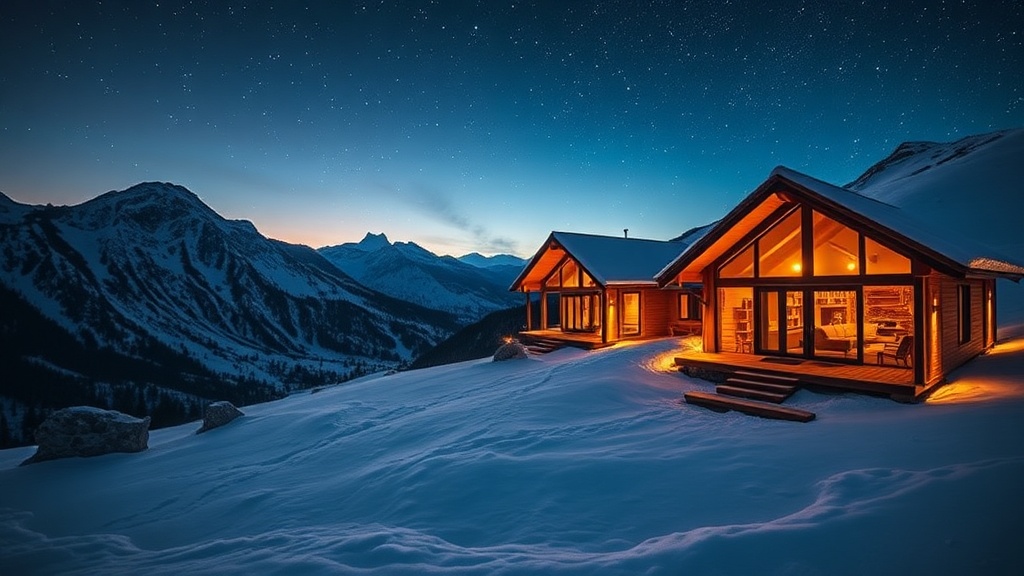
Booking Remote Mountain Lodges Without the Stress

This guide covers the logistics of securing lodging in remote mountain regions where standard booking platforms often fail. You'll learn how to identify reliable accommodation types, when to book, and how to handle the logistical gaps that occur when traveling to high-altitude or backcountry-adjacent areas.
Most travelers rely on big-name booking sites, but those sites rarely reach the small, family-run lodges or seasonal mountain huts that define a true hiking vacation. If you're looking for a place to stay near a trailhead in the Dolomites or a remote valley in the Andes, you can't just click a button and hope for the best. You need a specific approach to timing and communication.
Where do I find lodging near remote hiking trails?
When you move away from major cities, the availability of hotels drops significantly. Instead of looking for "hotels," you should search for terms like "rifugios" in the Alps, "lodges" in the Pacific Northwest, or "teahouses" in the Himalayas. These establishments are often built specifically for hikers and prioritize proximity to the trail over luxury amenities.
Often, these places don't even have a website. You might find that the only way to secure a spot is through a direct phone call or a specialized local agency. For example, if you're planning a trip through the high country of the US, checking the National Park Service website can provide leads on backcountry-adjacent lodging or authorized concessioners. This is a much better way to find authentic stays than scrolling through generic travel sites that might not even list the most remote options.
Types of Mountain Accommodations
Understanding what you're actually booking helps manage expectations. You'll generally run into three tiers:
- Mountain Huts/Rifugios: These are basic, often featuring bunk beds and shared bathrooms. They are perfect for hikers who want to be on the trail at sunrise, but don't expect high-end linens.
- Guest Houses/B&Bs: These are slightly more comfortable and usually located at the base of a trail system. They offer private rooms and hot meals.
- Remote Lodges: These are the premium option. They offer more comfort and often include guided-tour packages, but they are also the hardest to book during peak season.
When is the best time to book mountain stays?
The window for booking is much tighter in the mountains than in a coastal city. Weather dictates everything. If a heavy snowstorm hits, a pass might close, and your destination might become inaccessible. Because of this, you should aim to book your lodging at least four to six months in advance for peak summer months.
If you're planning a trip to the European Alps, keep in mind that many mountain huts don't even open until late May or June. If you try to book a stay for early spring, you might find that the entire region is effectively "closed" for hikers. Always cross-reference your booking dates with local seasonal guides to ensure the trails are actually passable. A great resource for checking seasonal accessibility and trail status is the Alpenverein, which provides data on mountain environments and safety.
Don't assume a trail is open just because the season has started. Local weather can keep a pass closed for weeks even after the official opening date.
If you wait until the last minute, you'll likely end up with a long commute from a distant city every day, which defeats the purpose of a hiking-centric vacation. You want to be able to wake up, lace your boots, and step right onto the path.
How do I handle payments and communications?
This is where things get tricky. Many of the best mountain lodges operate in areas with spotty internet or even no internet at all. You might find that they don't accept credit cards online, or they require a bank transfer to secure a room. This can be a major headache if you're used to one-click booking.
When communicating with these establishments, keep your messages brief and clear. If you are using email, include your exact dates, the number of people, and any dietary restrictions. If you're calling, be prepared for potential language barriers. Many mountain hosts are wonderful people, but they might not speak fluent English. A simple, clear sentence is better than a long, complex one.
Regarding payments, always ask for a written confirmation of your booking and the total cost. If you are paying via a wire transfer, keep a record of the transaction. It's not uncommon for these small businesses to have much more manual processes than the big-box hotels you're used to. It's a trade-off for the incredible locations they offer, but it requires a bit more patience and organization on your part.
Lastly, always check the cancellation policy. In the mountains, a sudden storm or a trail closure can change your plans instantly. You want to know if you can get your money back if the weather makes your planned route impossible. Some lodges are quite strict, especially if they are the only accommodation for miles, so read the fine print before you send any funds.