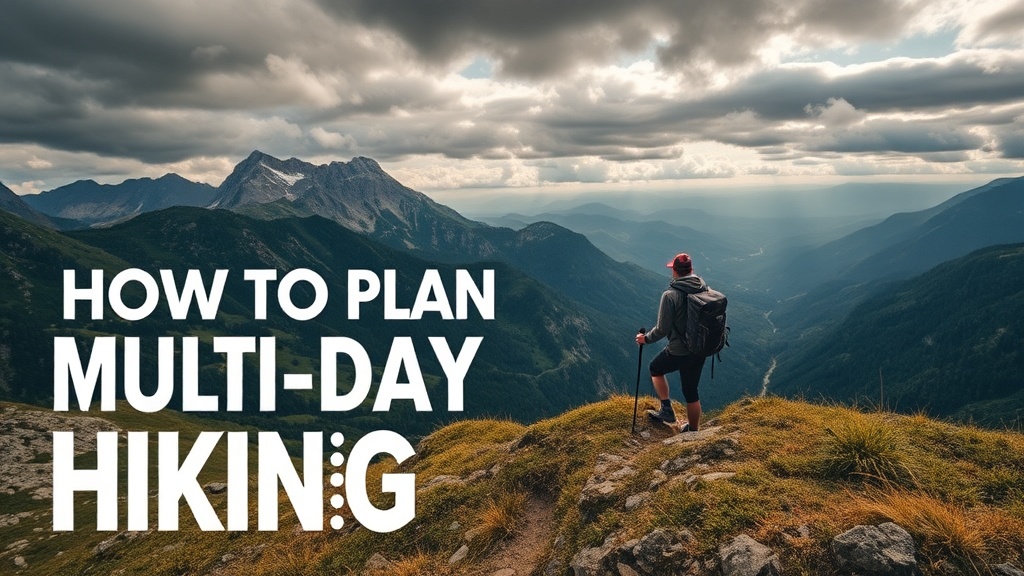
How to Plan the Perfect Multi-Day Hiking Vacation

Multi-day hiking vacations offer something ordinary trips rarely do — a chance to disconnect, test personal limits, and wake up to views that no hotel balcony can match. This post breaks down exactly how to plan a backpacking trip that spans several days: from choosing a trail and building an itinerary to picking gear, managing food, and staying safe in the backcountry. Whether the goal is a long weekend on a nearby loop or a two-week trek across mountain passes, the steps below will keep planning focused and the actual hiking enjoyable.
What Is the Best Way to Choose a Multi-Day Hiking Trail?
The best way to choose a multi-day hiking trail is to match the route to current fitness, experience level, and the time available — not the other way around. A stunning trail in the Swiss Alps means little if the elevation gain exceeds what the body can recover from day after day.
Start with total distance and daily mileage. Beginners often thrive on routes that average 8 to 12 kilometers per day. More experienced hikers might aim for 15 to 25 kilometers, especially on well-graded terrain. Elevation matters just as much as distance. A day with 1,000 meters of climbing will feel very different from a flat coastal walk.
Consider the season and climate. Some trails — like the Appalachian Trail sections in the eastern United States — turn muddy and bug-heavy in late spring. Others, such as routes in the Canadian Rockies near Banff and Jasper, can hold snow into July at higher elevations. Always check recent trail reports before locking in dates.
Worth noting: permits and reservation windows can make or break a trip. Popular routes like the West Coast Trail on Vancouver Island book up months in advance. Less famous alternatives — the Sunshine Coast Trail in British Columbia, for example — offer equally impressive scenery with far less red tape.
How Should You Pack for a Multi-Day Hiking Trip?
Pack light, but pack smart. Every item in the backpack should earn its place by serving more than one purpose or by being non-negotiable for safety. A base weight (gear minus food, water, and fuel) under 7 kilograms keeps the daily grind far more pleasant.
The "Big Three" — shelter, sleep system, and pack — deserve the most attention and budget. A poorly fitted pack will ruin the trip faster than bad weather. For backpackers covering serious miles, the Osprey Atmos AG 65 and Gregory Baltoro 65 remain popular for their suspension systems and load transfer. Women-specific fits — like the Osprey Aura AG 65 — are not marketing fluff; the hip belts and torso lengths genuinely fit differently.
Footwear splits hikers into two camps: traditional boots versus trail runners. Here's the thing — neither is universally right. Boots like the Merrell Moab 3 Mid WP offer ankle support and waterproofing, which helps on rocky, muddy trails. Trail runners such as the Salomon Speedcross 6 dry faster, weigh less, and reduce fatigue over long distances. The choice depends on ankle history, pack weight, and terrain.
| Gear Category | Ultralight Option | Comfort-First Option | Best For |
|---|---|---|---|
| Backpack | Hyperlite Mountain Gear Southwest 55 | Osprey Atmos AG 65 | Experienced minimalists vs. new hikers carrying extra gear |
| Shelter | Big Agnes Tiger Wall UL2 | REI Co-op Half Dome SL 2+ | Fast packers vs. those who want space to sit out storms |
| Sleeping Pad | Therm-a-Rest NeoAir XLite | Sea to Summit Comfort Plus SI | Weight counters vs. side sleepers needing cushioning |
| Stove | MSR PocketRocket 2 | Jetboil Flash | Cooks who simmer vs. hikers who just boil water |
Clothing follows the layering rule: a moisture-wicking base layer (merino wool or synthetic), an insulating mid-layer, and a waterproof shell. Cotton has no place on a multi-day hike — it holds moisture, chills the body, and dries slowly. A down jacket stuffed in the pack provides warmth at camp without much weight.
Don't overlook the small items. A Garmin inReach Mini 2 or Spot Gen4 satellite communicator adds a critical safety net where cell service dies. A headlamp (the Black Diamond Spot 400-R is a solid pick), first-aid kit, repair tape, and water purification tablets round out the essentials.
How Do You Plan Food and Water for Several Days on the Trail?
Plan for roughly 3,500 to 4,500 calories per day depending on body size, pack weight, and terrain difficulty. Dehydrated or freeze-dried meals are the standard for dinner because they're lightweight and simple to prepare — just add boiling water. Brands like Mountain House, Backpacker's Pantry, and Good To-Go dominate store shelves, though tastes vary widely. (Luz's honest take: some flavors taste like salty cardboard. Test them at home first.)
Breakfast and snacks are where hikers can save money and improve variety. Oatmeal packets, instant coffee, tortillas with peanut butter, trail mix, energy bars, and hard cheeses keep things simple. For longer trips, resupply boxes mailed to post offices or trail towns break up the monotony and reduce initial pack weight.
Water planning is non-negotiable. Know where sources are along the route — AllTrails and official park maps help, but seasonal creeks can run dry. Carry enough bottles or a hydration reservoir to cover stretches between sources. A Sawyer Squeeze water filter or chemical tablets like Aquatabs handle purification. Running out of water between sources is one of the fastest ways to turn a great hike into an emergency.
What Safety Steps Should Every Multi-Day Hiker Take?
Share the itinerary with someone who isn't on the trip. Include trailheads, planned campsites, and expected exit dates. If plans change on the trail — which happens — a quick message via satellite communicator prevents unnecessary search-and-rescue callouts.
Know the local wildlife protocols. In grizzly country — much of Alberta, British Columbia, Montana, and Wyoming — carrying bear spray and knowing how to use it is standard. Hang food bags or use bear canisters (required in places like Yosemite National Park) to keep both the hiker and the animals safe. The catch? Hanging food properly is harder than it looks. Practice the PCT hang method before leaving home.
Weather in the mountains shifts fast. A sunny morning can turn into hail by afternoon. Pack a reliable rain jacket and be willing to alter the route or take a zero day (a rest day with no mileage) when conditions turn sour. Pushing through a storm just to stick to a schedule is how hypothermia and injuries happen.
Blister prevention beats blister treatment. Stop at the first hot spot, cover it with leukotape or moleskin, and adjust socks or laces. Darn Tough merino wool socks and well-broken-in footwear make a bigger difference than any cream or powder.
How Can You Build a Realistic Itinerary?
Build buffer time into every day. A rule that works well: estimate how long a section should take, then add 30 to 50 percent. Photography breaks, snack stops, map checks, and unexpected stream crossings all chew through hours. Arriving at camp stressed and rushed defeats the purpose of a hiking vacation.
Group days into blocks. A common pattern is two or three hiking days followed by a lighter day or a rest day. This rhythm lets the body recover and provides flexibility if weather or fatigue causes delays. On a seven-day trip, planning for one short day or a full rest day often improves the overall experience more than squeezing in extra miles.
That said, be honest about daily start times. Not everyone wants to break camp at 5:00 a.m. If the group prefers leisurely mornings, shorten the mileage rather than force predawn alarms. The trail will still be there.
Sample 5-Day Itinerary Structure
- Day 1: Hike in 10 km, easy terrain — camp near a lake or river to ease into the rhythm.
- Day 2: Push 18 km over moderate elevation — the longest day while legs are fresh.
- Day 3: Rest day or short 8 km loop to a summit or viewpoint — recover and enjoy the location.
- Day 4: 15 km with a challenging pass or ridge — tackle the technical highlight.
- Day 5: Hike out 12 km — finish with enough energy to drive or travel home safely.
What About Training Before the Trip?
Start training at least six to eight weeks before a serious multi-day hike. The goal isn't marathon fitness — it's the ability to walk uphill with weight on the back for consecutive days. Stair climbing, weighted day hikes, and long walks on varied terrain build the right muscles.
Load the pack with the actual gear weight planned for the trip, even if that means walking local trails that look nothing like the destination. The body needs to adapt to the load on the hips and shoulders, not just the legs. Core strength also matters; planks, dead bugs, and weighted carries help maintain posture under a heavy pack.
"The best training for hiking is hiking. The second-best training is anything that keeps you on your feet with a little weight on your back."
Test every piece of gear before departure. Set up the tent in the backyard. Cook dinner on the stove. Walk ten kilometers in the boots. Discovering that a sleeping pad leaks or a jacket doesn't fit on day one of the trip is a rookie mistake that's easily avoided.
How Do You Handle Group Dynamics on the Trail?
Group dynamics can make or break a multi-day hiking vacation. The fastest hiker should never set the pace — the slowest person does. Otherwise, someone ends up exhausted, resentful, and at higher risk of injury. Agree on break schedules, camp chores, and decision-making before stepping on the trail.
Money conversations matter too. Who's buying group food? Who's carrying the shared gear like the tent or stove? Splitting costs fairly — and documenting them — prevents petty conflicts that sour the atmosphere after a hard day.
Solo hiking has its own appeal. Complete freedom, quiet mornings, and self-reliance draw many people to the trail alone. The risks are higher, though. Solo hikers need sharper navigation skills, more conservative decision-making, and a reliable way to call for help if something goes wrong.
Quick Tips for a Smoother Trip
- Pack the tent last and the rain jacket first — easy access matters when weather turns.
- Store toilet paper, electronics, and matches in waterproof bags. Moisture finds everything.
- Bring a small luxury: a paperback, a flask of whiskey, or a pair of camp shoes. Morale boosters are worth a few grams.
- Leave no trace. Pack out all trash, bury human waste properly, and keep campsites pristine.
- Keep a lightweight notebook. Looking back at notes from the trail often brings back memories photos miss.
A well-planned multi-day hiking vacation isn't about perfection — it's about preparation meeting flexibility. Choose a trail that excites without overwhelming. Pack gear that's been tested and trusted. Build an itinerary with breathing room. Do that, and the trail will deliver everything it promises: sore legs, star-filled nights, and the kind of clarity that only comes from walking for days with everything needed strapped to the back.