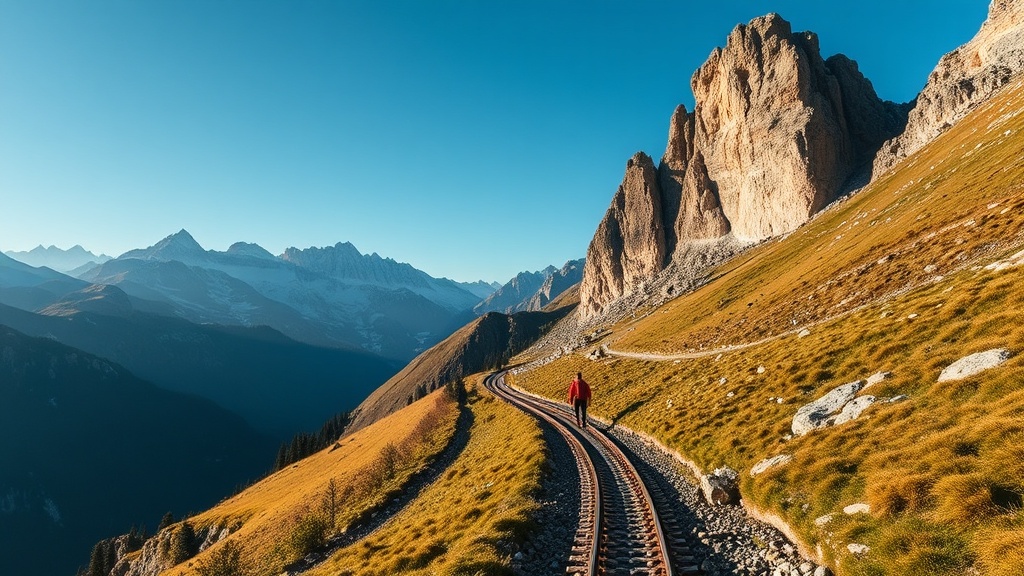
Why You Should Skip the Standard European Train Pass for Your Alpine Trekking

Most travelers assume that a rail pass is the most efficient way to reach high-altitude trailheads in the European Alps. They believe that sitting in a train car is the best way to soak in the scenery before a big hike. However, this mindset often leads to unnecessary delays, missed connections, and—most frustratingly—being stranded at a station far from the actual trailhead. Relying solely on public transit for mountain-based vacations often means you are at the mercy of strict schedules that don't align with the reality of mountain weather or trail conditions.
When you plan a hiking vacation in regions like the Dolomites or the Swiss Alps, your mobility dictates your success. If you spend three hours waiting for a bus that was canceled due to a rockfall, your entire itinerary shifts. A more flexible approach involves understanding how local transit actually works and why a rental car or a localized transport pass might serve your specific needs better than a broad, expensive rail pass.
Is a Eurail Pass Worth It for Mountain Hikers?
The short answer is usually no. While a rail pass is great for hopping between major cities like Paris, Berlin, or Rome, it lacks the granularity needed for serious trekking. The high-altitude regions where the best trails live are rarely connected by high-speed rail lines. Instead, you'll find narrow mountain roads, local cable cars, and much smaller, infrequent bus routes. A rail pass might get you to a major hub, but it won't get you to the trailhead of that remote hut you've been eyeing.
Consider the logistics of a multi-day trek in the Mont Blanc massif. You might want to move between valleys to catch different weather windows. A train might take you to Chamonix, but from there, you're reliant on local buses or foot travel. If you spend a significant amount of money on a high-tier rail pass, you're paying for speed and distance that you simply won't use when you're deep in the mountains. You're better off investing that money into a local mobility pass or a small rental vehicle that allows you to reach the smaller, less-visited access points.
How Do I Find Reliable Transportation to Remote Trailheads?
Finding your way to a trailhead requires looking beyond the major booking sites. Instead of searching for "train to the mountains," look for local transport authorities. For example, if you are heading to the Italian Dolomites, you should look at the South Tyrol tourism official sites to see how the bus networks function. These local systems are designed for hikers, not for long-distance travelers. They are built to move people from the valley floor to the cable car base stations.
A common mistake is assuming that because a destination is famous, the transport will be easy. In reality, the most spectacular hiking routes are often the hardest to reach. I've seen travelers arrive in a small Alpine village only to realize the last bus left two hours before they arrived. To avoid this, check the local municipal websites for the specific region you're visiting. Look for "local transport schedules" or "regional bus networks" rather than general travel guides. This level of detail prevents the frustration of being stuck in a village with nowhere to go and no way to get back to your accommodation.
The Hidden Costs of Public Transit in the Alps
People often forget to factor in the cost of the "last mile." Even if you get to a mountain-adjacent town via a cheap train, you still have to pay for the local shuttle, the cable car, or a taxi. These costs add up quickly. A cable car ride to a high-altitude hut can sometimes cost as much as a train ticket between two cities. If you aren't tracking these expenses, your budget will vanish faster than you expected.
- Cable Car Fees: These are rarely covered by standard rail passes.
- Local Bus Fares: Often require different tickets than the national rail system.
- Taxi Costs: Necessary when a bus schedule fails you.
Instead of a single large pass, consider buying a regional-specific pass. Many regions in Switzerland and Austria offer cards that include both local buses and mountain lifts if you stay in their specific valleys. This is a much smarter way to manage your funds and your time.
Can I Drive a Rental Car to Remote Hiking Spots?
Driving is often the superior choice for those who want total control over their schedule. It allows you to reach trailheads that aren't serviced by any bus line at all. However, driving in the Alps requires a specific set of skills and preparations. You aren't just driving on a highway; you're navigating switchbacks, narrow passes, and potentially snow-covered roads even in the shoulder seasons.
If you choose to drive, ensure your rental includes a way to handle mountain conditions. Always check if your car is equipped for the terrain. Also, be aware of the "ZTL" (Zona a Traffico Limitato) zones in Italy. Many mountain villages have strict zones where cars are prohibited. If you accidentally drive into one, the fines are steep. You can learn more about driving regulations in Europe via the official European Union portal to ensure you're following the rules of the road.
The freedom of a car is unmatched. You can stop at a scenic overlook, change your hiking route on a whim if the weather looks suspicious, and carry much heavier gear without worrying about bus luggage limits. For a dedicated hiker, the ability to carry your full kit and a tent without the constraints of a train schedule is a massive advantage. Just remember to book your parking in advance, as many trailheads have very limited space for vehicles.
Comparing Your Options
| Method | Pros | Cons |
|---|---|---|
| Rail Pass | Comfortable, scenic, easy for long distances. | Inflexible, doesn't reach many trailheads, expensive for mountain use. |
| Local Bus | Affordable, eco-friendly, connects to cable cars. | Strict schedules, limited frequency, can be unreliable in bad weather. |
| Rental Car | Complete freedom, reaches remote spots, handles gear easily. | Driving stress, parking issues, potential for ZTL fines. |
Ultimately, your choice depends on your priority. If you want to see the whole continent, take the train. If you want to see the inside of a mountain valley, grab a local pass or a set of keys. Don't let a standard travel template dictate how you experience the wilderness. Your vacation should be as rugged and flexible as the trails you intend to walk.