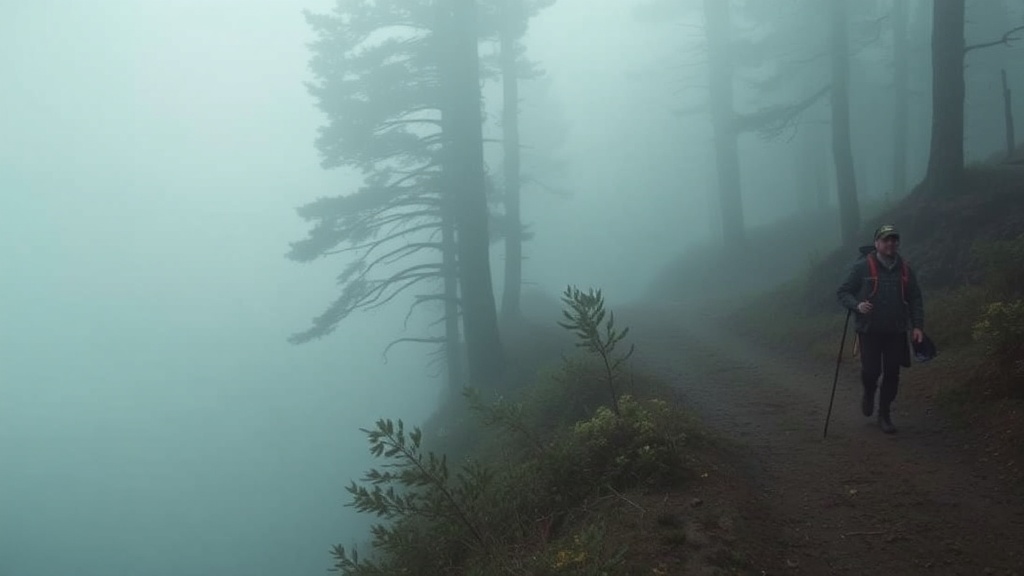
Navigating the Mist with Local Folklore and Trail Maps

The temperature drops ten degrees in seconds as a wall of white fog rolls off the ridge. One moment, the jagged peaks of the Dolomites are visible under a bright sun; the next, you’re staring at a blank, milky void. Visibility shrinks to ten feet. This guide breaks down how to use topographical maps and local oral histories to keep your bearings when the weather turns. It’s about understanding that a map shows you the ground, but the locals know the spirit of the air.
Fog isn't just a visual nuisance. It’s a physical weight that changes how you perceive distance and direction. When you can't see the next landmark, your brain starts playing tricks on you—making a small hill look like a mountain or a gentle slope look like a cliff. You need a plan that relies on more than just a smartphone screen.
How Do You Use a Map in Low Visibility?
You must rely on physical topographical maps and a compass rather than a GPS signal alone. Digital devices fail when the battery gets cold or the satellite signal drops behind a thick cloud bank. A paper map provides a constant, unshakeable reference point that doesn't require a battery.
When the mist rolls in, stop moving for a second. If you keep walking while disoriented, you'll likely drift off the established path. I always keep a Brunton Compass or a basic baseplate compass in my hip belt pocket—not buried in my pack. You need to be able to grab it instantly.
Look for "handrails" on your map. A handrail is a linear feature like a stream, a ridge line, or a specific road that you can follow to stay on track. If you know there is a river to your left, you can walk a straight line relative to that river even if you can't see more than a few meters ahead. It’s a way to stay oriented through touch and sound as much as sight.
- Identify your bearing: Set your compass to a known direction and hold it steady.
- Check your elevation: Use contour lines to ensure you aren't climbing a slope that is too steep for your current gear.
- Listen: In heavy fog, sound carries differently. Listen for the rush of water or the sound of wind through specific types of trees.
Don't rely solely on Google Maps for backcountry navigation. It's great for finding a coffee shop in Calgary, but it won't save you when a cloud settles into a valley. You need something with contour lines that shows the actual shape of the earth.
Why Does Local Folklore Matter for Safety?
Local folklore provides practical weather warnings disguised as stories, helping hikers recognize dangerous patterns before they happen. While a myth might sound like a tall tale, it often contains a kernel of truth about the local environment. For example, many mountain communities have legends about "the white lady" or "the ghost wind"—these are often coded ways of describing sudden, dangerous fog or wind shifts.
When I was hiking in the Alps, a local guide told me that if the birds stop singing and the goats move to the lower meadows, the "mountain spirits" are restless. That's just a poetic way of saying a high-pressure system is breaking and a storm is coming. It’s worth asking the people at the trailhead about the "mood" of the mountain. They know the subtle signs that a digital weather app might miss.
Understanding the local lore can actually help your mental state. If you view the fog as a predictable part of the mountain's character rather than a terrifying anomaly, you'll stay calmer. A calm hiker makes fewer mistakes. A panicked hiker loses the trail.
It’s also a way to build a mental map. If a local story says a certain pass is "haunted" because the wind howls through it a certain way, you now know that specific area is a high-wind zone. That piece of "folklore" just became a vital piece of safety data.
What Gear Should You Carry for Foggy Weather?
You should carry a high-quality waterproof shell, a physical map, a compass, and a reliable light source. Even if you plan to hike during the day, fog can turn a bright morning into a dark, disorienting afternoon very quickly. If you get stuck in a fog bank, you might be walking for hours before the light changes.
I never leave the house without my Arc'teryx Beta jacket. It’s not just about staying dry; it's about the psychological comfort of knowing you are protected from the damp chill. When the mist hits, the temperature feels much lower than the thermometer suggests.
| Item | Purpose | Why It Matters in Fog |
|---|---|---|
| Physical Map | Navigation | Doesn't rely on battery or GPS signals. |
| Compass | Orientation | Provides a true heading when sight is zero. |
| Headlamp | Visibility | Essential if the fog turns into a dark storm. |
| Bright Shell | Visibility | Helps your hiking partners find you in the whiteout. |
If you're worried about weight, remember that a lightweight kit is great, but it shouldn't be at the expense of safety. I often check out packing tips for high altitude to ensure I'm not carrying unnecessary bulk while still maintaining my safety margin.
One thing to consider: a bright colored jacket (like orange or bright blue) isn't just for fashion. In a whiteout, a bright color can be a lifesaver if you become separated from your group. It makes you a visible speck in a sea of white.
How Do You Handle a Whiteout?
The best way to handle a whiteout is to stop moving immediately and wait for visibility to improve or for the weather to break. If you can't see the ground clearly, you are at a high risk of walking off a ledge or losing the trail entirely. It's better to sit and wait than to wander blindly.
If you must move, use a "tether" method with your hiking partners. This means staying within arm's reach or using a short rope. If you're solo, you have to be much more disciplined. If you lose the trail, do not try to "find" it by guessing. Go back to your last known certain point. Go back to the last rock or tree you were 100% sure of.
Check your pace. In the fog, your sense of speed is skewed. You might feel like you're moving quickly, but you're likely wandering in circles. This is a common phenomenon called "circular walking." Without a fixed point to look at, humans naturally tend to walk in circles because of slight asymmetries in our stride. This is why the compass is your best friend.
The catch? Sometimes the fog doesn't lift for hours. If you are caught in a whiteout and can't see the trail, you might need to deploy an emergency bivvy or even set up a temporary shelter. This is why I never skip the essential trail mistake prevention tips. Preparation is the difference between a funny story and a rescue mission.
If you find yourself stuck, stay calm. Breathe deeply. The fog is just water vapor—it can't hurt you. The danger comes from your reaction to it. If you can maintain your composure, you can use your gear to find your way back to safety. Keep your eyes on your compass, keep your feet on the ground, and wait for the world to reappear.